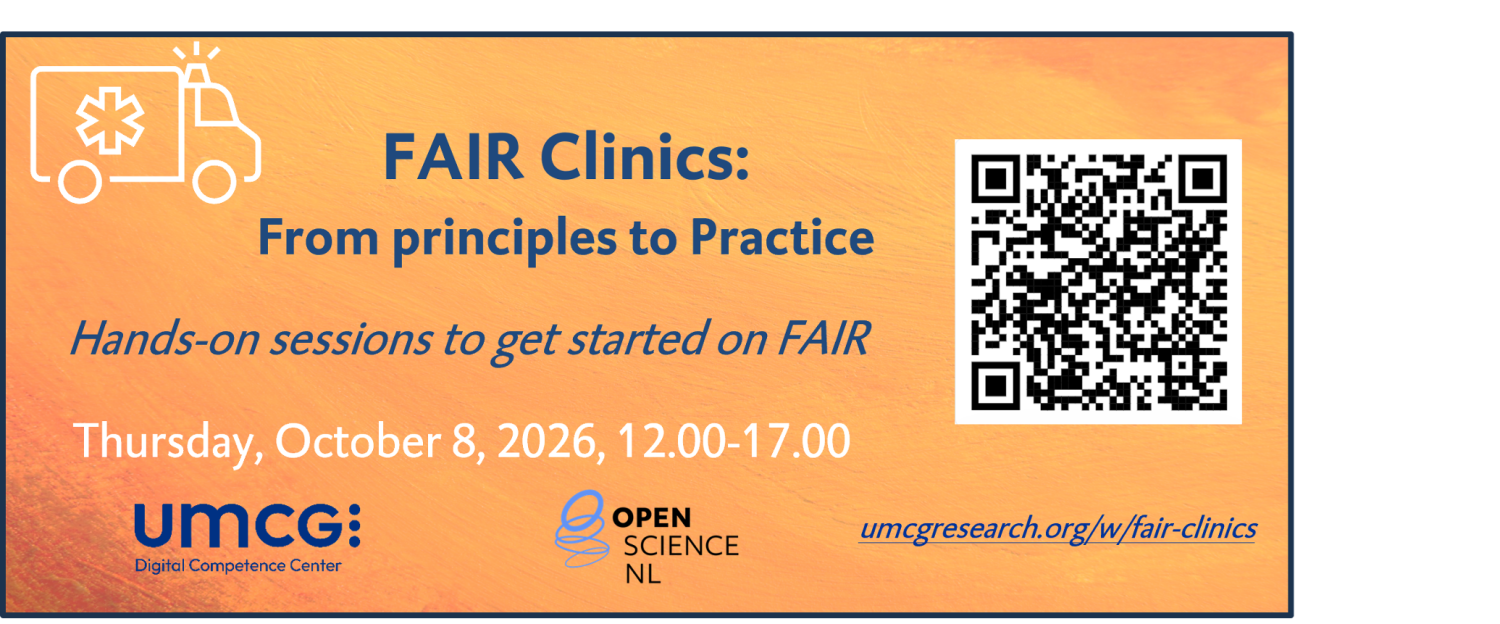
FAIR Clinics: From Principles to Practice
Not sure where to start with FAIR? Join the FAIR Clinics and take your first steps.
About
The FAIR Clinics are short, hands-on sessions to actively work on practical outputs relevant to your own research data. The focus is not just on why FAIR matters, but on how to get started with FAIR in your research.
Participation is free, but registration is required as spaces are limited.
Date: 8 October 2026
Location: NH Groningen Hotel
Information and registration here: https://umcgresearch.org/w/fair-clinics
This event is funded by the Open Science NL.
What are FAIR Clinics?
FAIR Clinics are interactive, one-hour sessions that each focus on a very specific research data management task.
In each clinic, you will:
- Work on a concrete output (e.g. data reuse conditions, readme file, or software repository)
- Use structured guidance such as templates and checklists
- Receive support while working on your own material
The goal is not to finish everything during the session, but to leave with a clear starting point and practical next steps you can continue independently.
FAIR Clinics you can choose from
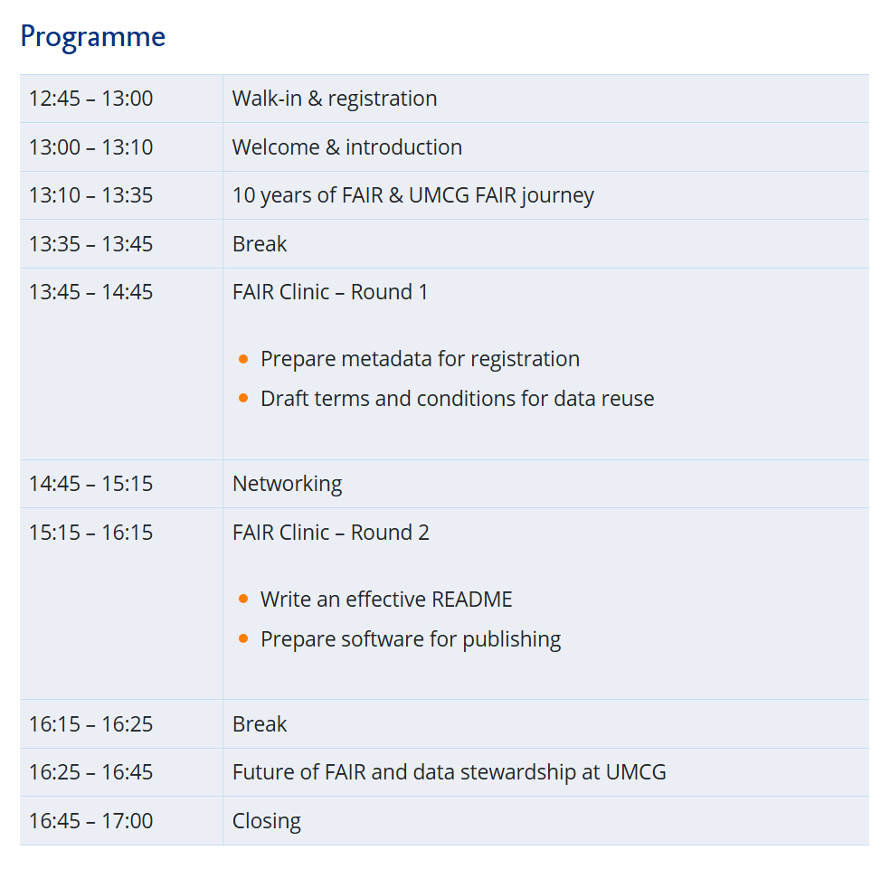
Write effective README
Learn how to create clear and structured README files that make your data or code understandable and reusable by others.
You will leave with:
- A structured README outline tailored to your project
- A first draft of key sections (description, contents, usage)
- A short example description of your data or files
- A basic section covering reuse and contact information
Prepare software for publishing
Learn how to make your research code shareable, reusable, and transparent, and take the first steps towards publishing it.
You will leave with:
- A repository structure ready to expand
- A draft README skeleton (purpose + basic usage)
- A first licence choice and draft citation format
- A checklist of required files (e.g. README, LICENSE, dependencies) and next steps
Draft terms and conditions for data reuse
Explore how to define clear and FAIR conditions for others to access and reuse your data.
You will leave with:
- A first draft of data reuse conditions (what is allowed / not allowed)
- A short description of data sensitivity and access restrictions
- A draft data availability statement (e.g. for publications)
- A structured outline you can refine further
Prepare metadata for registration
Learn what metadata is essential to make your research findable and discoverable, and practise structuring this information for your own project.
You will leave with:
- A partially completed metadata record (e.g. title, description, creators, data types)
- Core administrative information (e.g. PI, department, contact details)
- Basic dataset-level metadata (e.g. format, size, sensitivity, access conditions)
- A clear overview of what information is still missing